
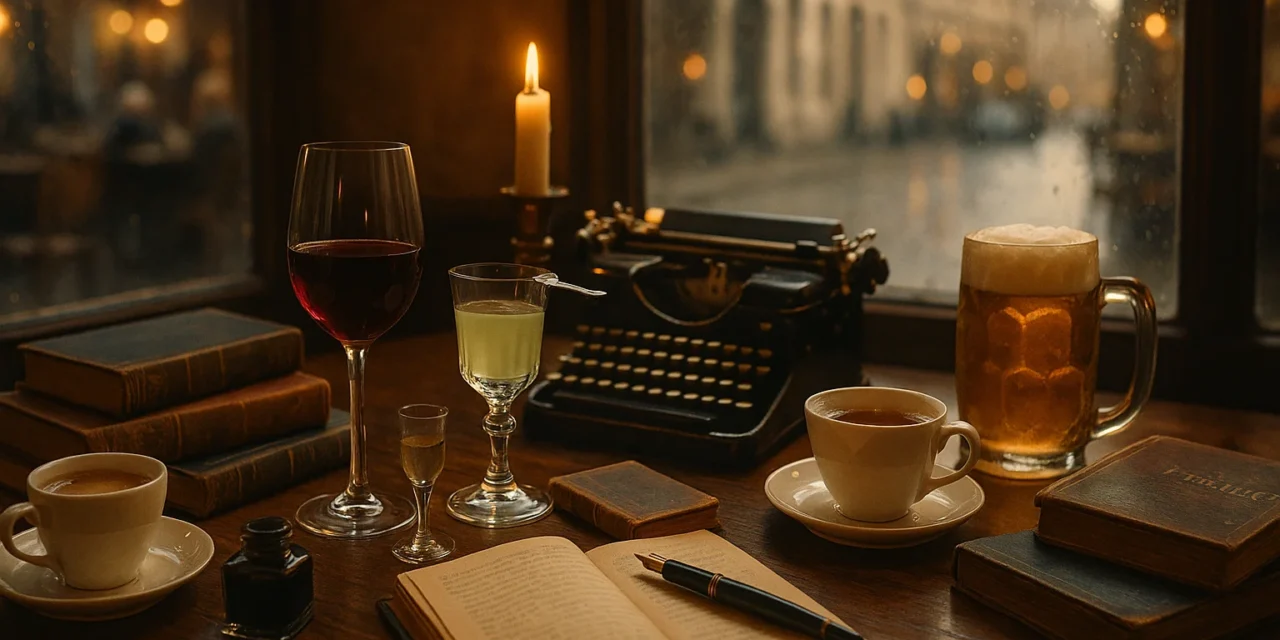
Literature and drink have often shared the same table. Across Europe, writers have drawn not only from imagination but also from the social rituals that surround a glass. From cafés to taverns, the act of drinking shaped both conversation and creativity. In this sense, a writer’s drink was rarely just a habit; it became part of their process and identity. The same way a fan follows updates on a cricket live line app to stay connected to a favorite game, many writers turned to their chosen beverage as a steady companion — something that grounded them amid the uncertainty of artistic work.
The Role of Drink in the Writer’s World
For many European writers, alcohol was less about indulgence and more about rhythm. The café, the bar, and the inn served as informal workplaces. They provided noise and company, yet also a kind of privacy. Within these public settings, writers could observe language, manners, and emotion — raw material for their craft.
Drinks played a practical role too. Coffee, wine, and spirits shaped the tempo of work. Morning coffee woke the mind; evening wine slowed it down. The cycle reflected how creativity alternates between focus and reflection. Some writers claimed that alcohol loosened the constraints of logic, allowing ideas to flow more freely. Others used it as punctuation — a way to mark the end of work for the day.
The habit was not without cost. Many famous writers faced health and personal struggles tied to their drinking. Yet even in these cases, the relationship between alcohol and art remained complex. It represented both discipline and escape, creation and destruction.
The Café as Cultural Ground
European literary life was built around places where people gathered. The café became a second home for thinkers, poets, and journalists. In the 19th and early 20th centuries, cities like Paris, Vienna, and Prague developed distinct café cultures that blended discussion, performance, and writing.
The drinks themselves varied by region but shared a social purpose. In France and Italy, wine and coffee symbolized conversation — slow, continuous, and open. In Central Europe, stronger spirits reflected a colder climate and a more introspective temperament.
Writers often returned to the same table each day, building routine through repetition. The familiarity of setting and drink helped sustain focus. These environments blurred the line between work and leisure, turning writing into a communal act even when done in solitude.
Northern Europe: Sobriety and Reflection
In northern Europe, writers often approached drink differently. Harsh weather and long winters created conditions for introspection. Alcohol functioned less as a social tool and more as a private ritual.
For many, a simple drink marked the boundary between thinking and writing. It symbolized a pause — a moment to reorder thoughts before putting them to paper. This restraint produced a culture of moderation rather than excess. While some northern writers battled addiction, others treated alcohol as an occasional companion, part of the mental preparation rather than the creative act itself.
The difference between southern and northern traditions shows how climate, culture, and temperament shape even the smallest details of artistic life.
The Symbolism of the Glass
The image of a writer with a drink has become an enduring cultural symbol. It represents solitude, rebellion, or contemplation, depending on the context. A single glass on the table can stand for the tension between discipline and indulgence.
In literature itself, the drink often appears as metaphor. It might represent memory, time, or decay. Some authors used it to explore themes of identity — how individuals navigate the distance between inner life and outer appearance. Others saw in it a mirror of society, a way to critique excess or hypocrisy.
Through such symbolism, the drink becomes more than an accessory; it turns into a device for storytelling.
Inspiration or Illusion?
The connection between drinking and creativity has long been debated. Some argue that alcohol stimulates imagination by lowering inhibition. Others claim it dulls judgment, leading to confusion rather than insight. Historical accounts suggest both can be true, depending on the person and the phase of their work.
What stands out is not the substance itself but the ritual around it. Many writers found that routine — the same place, the same cup or glass — triggered focus. The act of drinking became a cue for writing, a signal to begin or to pause. In this sense, the effect was psychological rather than chemical.
The modern view tends to separate the art from the myth. While earlier generations romanticized the “drunken genius,” today’s understanding sees creativity as a form of discipline. Alcohol may accompany the process, but it does not define it.
The Continuity of Custom
Even as work habits change, the connection between writing and drink persists in softer forms. Writers still gather in cafés, though laptops now replace notebooks. The ritual remains — the sound of a cup, the quiet observation of strangers, the sense of being part of a public world while doing private work.
Across Europe, the tradition endures not because of the drink itself but because of what it represents: a rhythm, a pause, and a space for thought. Whether it’s coffee in the morning or a glass of wine in the evening, the gesture ties modern writers to centuries of predecessors.
Conclusion
The link between European writers and their favorite drinks is less about excess than about habit and meaning. Each beverage carries cultural weight — shaped by geography, history, and personal need. For some, the drink sparked inspiration; for others, it provided comfort or focus.
What unites them is not what they drank but how they turned ordinary rituals into creative practice. The glass, like the page, became a vessel — one holding liquid, the other thought — both part of the same human effort to find rhythm in chaos and expression in silence.