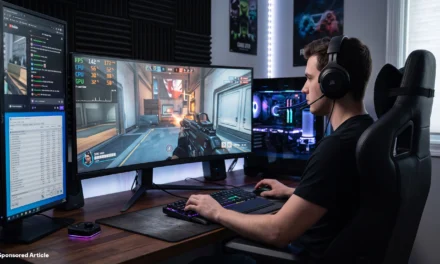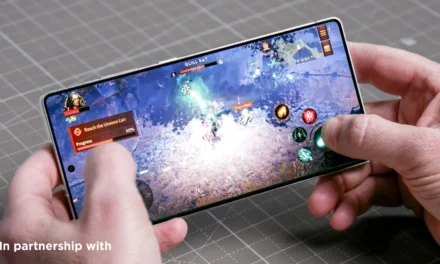

The 6v6 hero-shooter mechanics in Marvel Rivals mirror tournament poker in several massive ways, especially when it comes to things like high-stakes resource management, calculated risk and taking advantage of your position. Successful players treat their abilities and team composition as “hole cards” that must be played at just the right moment to maximize their value.
At first glance, Marvel Rivals and tournament poker might seem like they’re worlds apart. One is a fast-paced team-based PvP brawler while the other is a card game centered around probability and patience. But when you strip these down to their bare essentials, you’ll see that at their core, these games share the same strategic logic.
Whether you’re hopping onto a virtual poker tournament on betFIRST casino or logging into a battle on Marvel Rivals, the same principles apply. Both are won through information control, calculated risk, psychological pressure and resource management. Most players approach Marvel Rivals like a hero-shooter, but the best players approach it like a poker table.
Stack Management vs. Resource Management
Both in poker and Marvel Rivals, size matters. At least, when it comes to guarding your resources. Just like a poker player needs to manage their chip stack, a Marvel Rivals team needs to manage their cooldowns and ultimates. In both arenas, managing what you have against what you need will determine if you can stay in the game or if you’re just waiting to be blinded out.
In poker, having a Big Stack means you can basically bully the rest of the table and force other players to either fold or risk their tournament life. In Marvel Rivals, having a 3-4 Ultimate lead is your version of a Big Stack. Much like a chip leader raises in order to steal blinds, a team with Magneto’s “Meteor M” can take an aggressive stance. The enemy must either fold or risk a total team wipe.
You should never overbet when you’re ahead. If you’re in the lead, you play GTO (Game Theory Optimal) and only use as many resources as you need to hold the point, saving your chips for the final overtime push.
Having a Short Stack in a tournament means your options are limited to either going all-in or folding. When your team is low on chips, meaning you have no Ultimates and your Strategists are down, the only move you have left is a high-variance play. But as a Short Stack, you need to be precise. You can’t afford to waste a single cooldown, so every ability you use must have a high Return on Investment (ROI).
Hand Reading vs Team Readiness
In poker, hand reading is the practised art of deducing what cards your opponent likely holds based on their betting patterns. In Marvel Rivals, you read Ultimate Economy and Cooldown status. Everyone has a “tell” in poker, and Marvel Rivals is the same. Say, for example, Magneto starts playing unusually aggressively or positioning for a high-ground flank, this might be a sign that he’s telegraphing his Metallic Fusion Ultimate.
Reading your opponent’s stack size is also a valuable skill to acquire. Before you call a fight, you should assess your own team’s effective stack. Having 100% health but 0% Ultimate charge is like having a Big Stack but being dealt a 7-2 offsuit. You have the weight to survive, but no nut hand to actually win the pot.
In tournament poker, you don’t play a massive pot if you’re the Short Stack unless you’re forced to. In Rivals, if your Strategists, like Mantis or Jeff, are either dead or returning from spawn, then your “team readiness” is zero. Going into battle here is the equivalent of a mathematical punt.
The Art of Bluffing
In both Marvel Rivals and high-stakes poker tournaments, bluffing has nothing to do with the cards or the heroes; it’s all about the story you’re telling. Essentially, you want to outsmart your opponents by playing a layered psychological game that manipulates your opponent into making a mistake.
In poker, you might choose to bet on a scare card despite having nothing. In Rivals, we call this Aggressive Posturing. A good play using this tactic would be a Venom or a Hulk leaping into the enemy backline without their Ultimate or even being on full health. By playing with Big Stack energy, you trick your opponent into folding their defensive Ultimates out of fear. You’ve basically traded a cooldown for their “Tournament life” resource.
The goal in both cases is to cause your opponent to panic and make them waste their best hands on nothing but a bluff.
Positional Advantage vs Position at the Table
Position is the ultimate information filter. It determines who has to act on incomplete data and who gets to make the final, informed decision. In poker, being “in position” means you get to act after your opponent, giving you a strategic edge. You get to decide after gaining valuable information, which reduces your risks and gives you more control. In Marvel Rivals, map control and zoning give you a similar advantage.
In poker, the Button is the strongest seat because you get to see everyone else’s bets before you move. In Rivals, heroes with verticality like Iron Man or Spider-Man basically hold the Button. From the high ground on maps like Tokyo 2099, you get to see the enemy’s formation or betting pattern.
Just like a Button can either fold safely or raise to steal, a high-ground hero can choose exactly when to attack or simply stay hidden if the enemy’s hand looks too strong.
Team Synergy vs Table Dynamics
In both of these games, you’re not just playing the cards; you’re playing the people and the chemistry between them. The table dynamics can determine how profitable your next move is based on who’s sitting next to you.
At a poker table, you can identify the “Whale” (aggressive, high-variance) and the “Nit” (ultra-conservative). In Marvel Rivals, you need to read your own team’s “Table Dynamic”:
- If your Venom is a “Whale” (diving constantly), you shouldn’t play a “Nit” style. You must “back their bet” with a Luna Snow heal or a Black Panther follow-up.
- If your team is playing “scared money” (poking from afar), a solo “all-in” dive is a guaranteed loss. You have to adjust your “range” to match the table’s energy.
Going All-In
In both Marvel Rivals and poker, you never know everything. You need to operate on incomplete information by calculating, estimating and adjusting. Remember that mechanical skill wins duels, but strategic skills win tournaments. If you want to rise through the ranks on Marvel Rivals, you need to start thinking like a poker player.